Hypnosis
What a Stage Hypnosis Show Is Really Like
Stage hypnosis: what is really happening?
Stage hypnosis looks like mind control in a spotlight. In reality, it is closer to a high-energy improv show with a hypnotist guiding the pace, attention, and permission structure.
That does not make it fake. It makes it human.
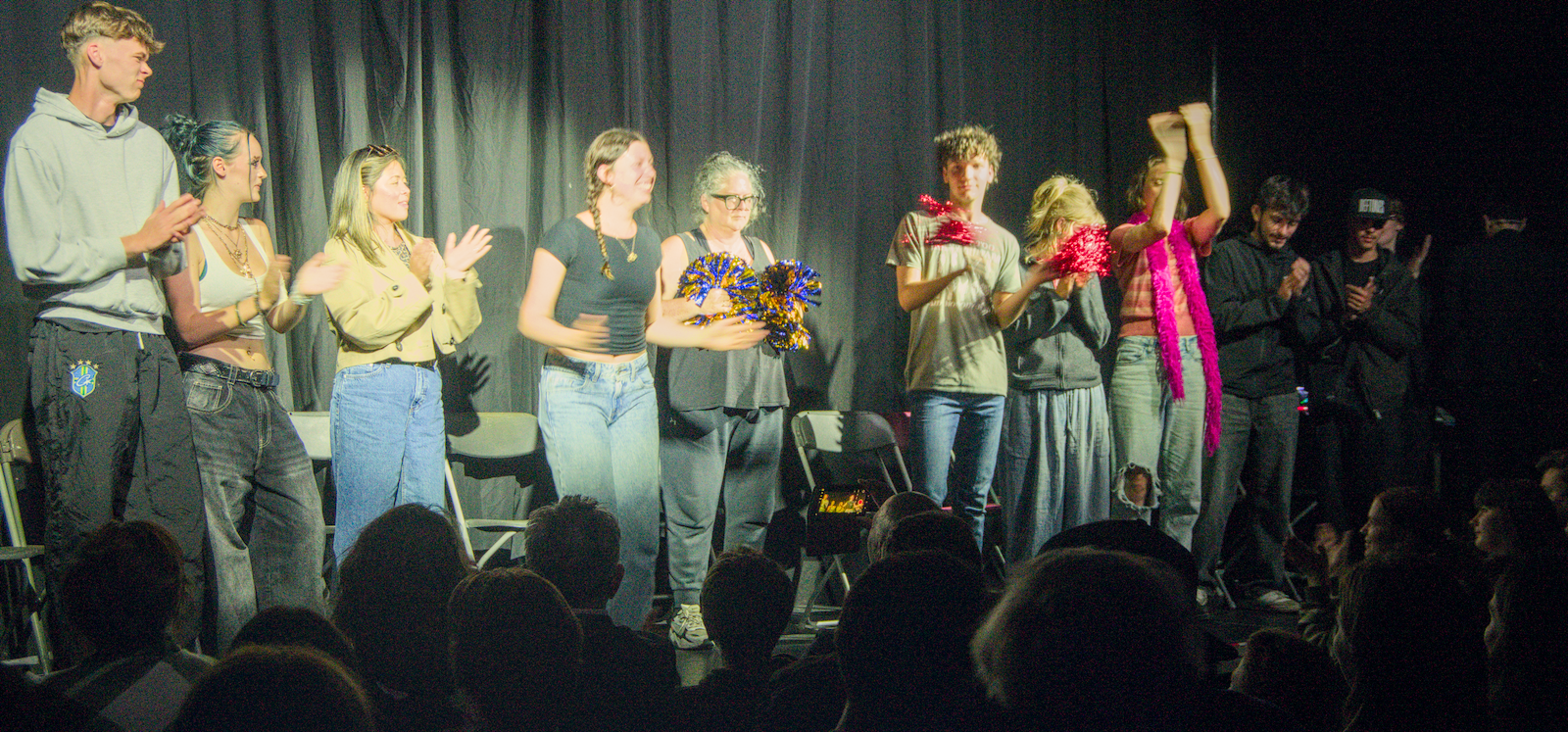
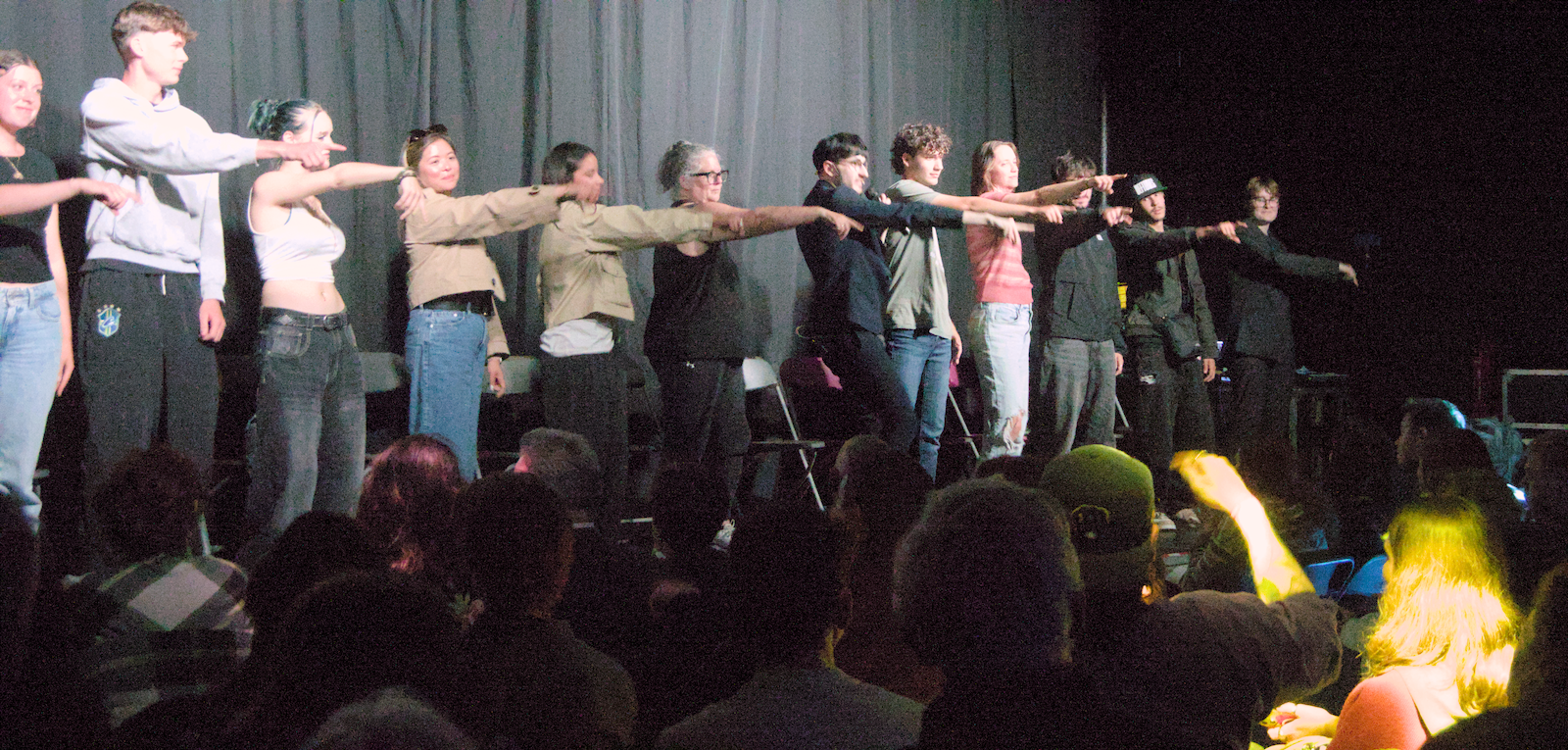
I watched a live Daniel Sinclair Hypnosis show with the eyes of both an audience member and a therapist. What stood out was not mystery, but cooperation: people responding to suggestion, attention, humour, social permission, and the strange freedom that comes when everyone has agreed to play.
From the outside, it looks impossible
If your idea of hypnosis comes from horror films, tabloid television, or stage villains with improbable capes, a hypnosis show can look absurd. A stranger speaks for a few minutes, people close their eyes, and before long volunteers are laughing, moving, forgetting, pretending, performing, and sometimes looking deeply absorbed.
From the audience, it can seem as though something has been done to them.
But the real mechanism is subtler. A stage show is messy, live, and social. People laugh at the wrong time. They mishear instructions. Some go along enthusiastically. Some barely respond. Some are quietly returned to their seats. That messiness is part of the evidence. You cannot run a whole theatre full of stooges without the entire thing collapsing into amateur pantomime.
The show works because enough people want to participate, and because the hypnotist knows how to find them.
How volunteers are really chosen
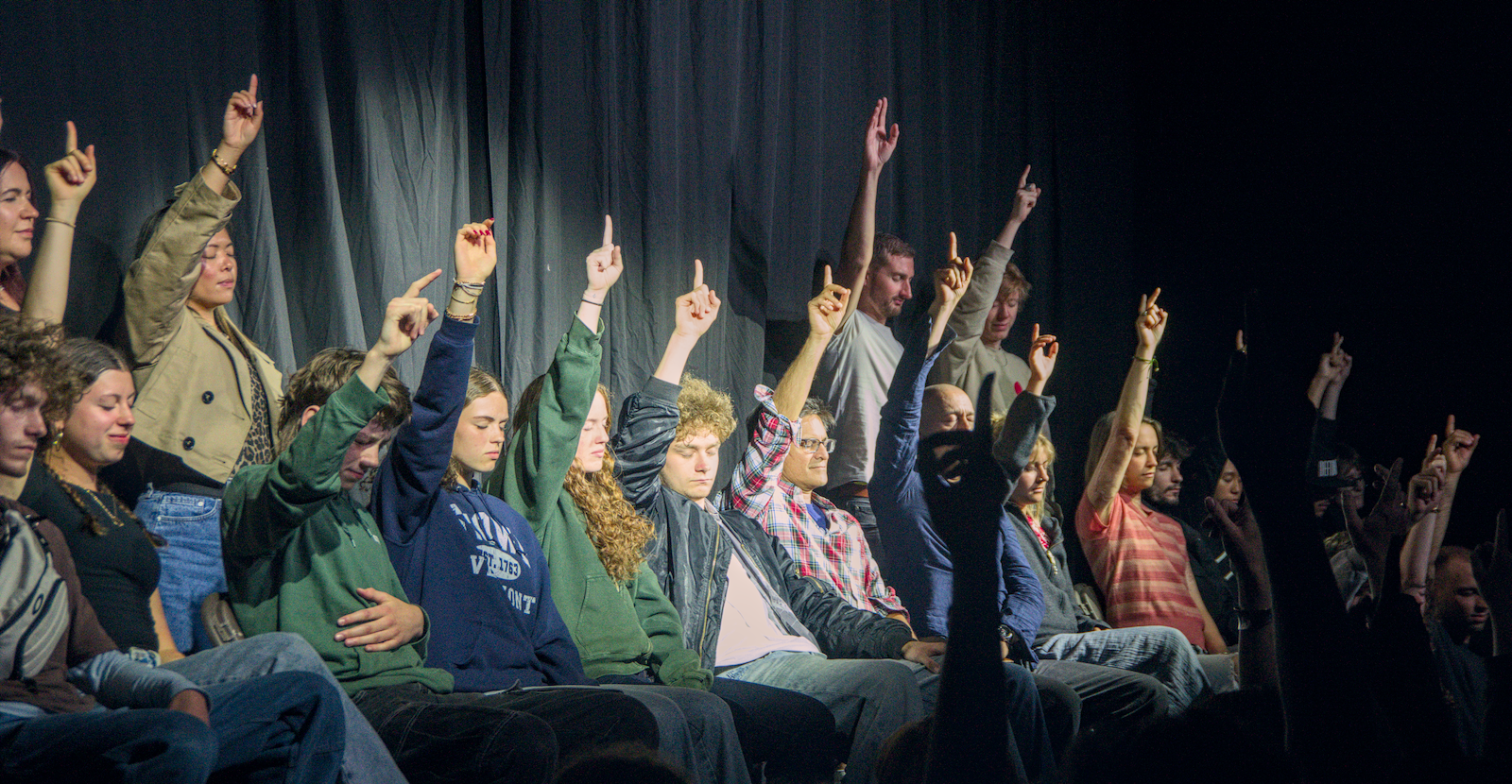
The selection process starts before anyone is formally hypnotised.
A hypnotist will often use quick audience exercises: fingers drawing together, hands locking, arms feeling light or heavy, attention narrowing around a simple instruction. These are not magic tricks. They are suggestibility tests. They show who responds quickly to imagery, who is comfortable being seen, and who is willing to follow the game.
That last part matters.
The people who go on stage are usually not random victims of mysterious power. They are the ones who have already shown interest, responsiveness, and willingness. The shy, the sceptical, the wary, and the “absolutely not” crowd stay in their seats, which is exactly where they should be if that feels safer.
Consent is not a decorative extra. It is built into the structure of the show.
What it feels like on stage
From the inside, hypnosis is not usually experienced as being taken over. People are not empty puppets waiting for instructions. Most describe something closer to focused absorption.
Common reports include:
- narrowed attention: the hypnotist’s voice becomes the main thing being followed;
- vivid imagination: suggestions feel strong enough that responding to them feels natural;
- social permission: the show gives people an excuse to act in ways they normally would not;
- reduced self-consciousness: the inner critic loosens its grip for a while.

That does not mean people lose all control. Most know roughly what they are doing. They may feel unusually absorbed, unusually playful, or unusually willing to follow a suggestion, but they are still people with boundaries.
If a suggestion crosses a personal line, many people simply do not follow it. That is not a failure of hypnosis. It is a useful reminder that trance does not erase the person.
Are they all faking?
The honest answer is more interesting than either extreme.
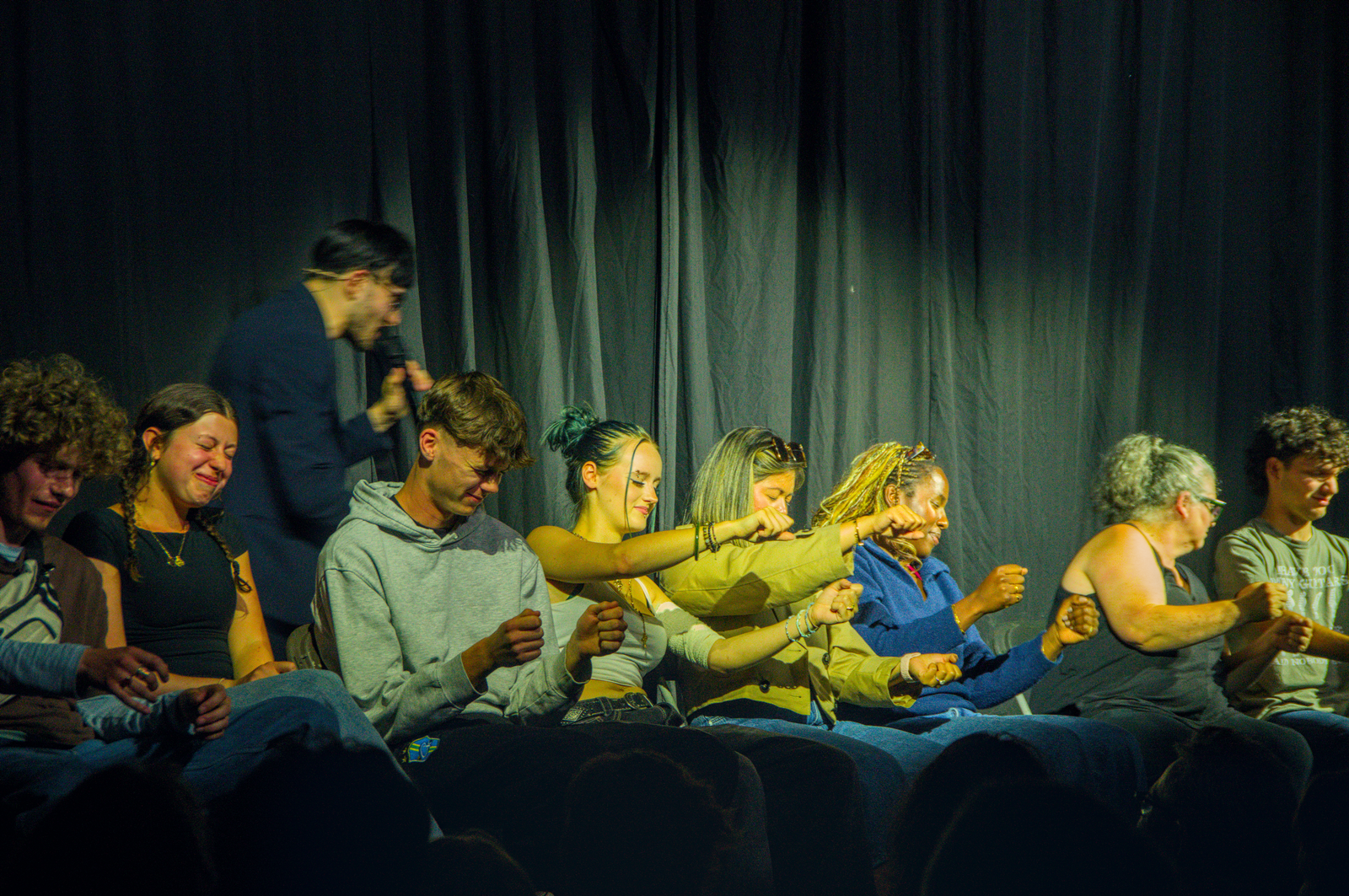
Some people exaggerate. Some are mostly playing along. Some respond lightly. A few drop into a much deeper state and become the dramatic centre of the show.
That spread is exactly what you would expect from human beings. Give people permission, attention, expectation, humour, and a confident guide, and behaviour changes. Hypnosis focuses that response. It does not manufacture a new personality from nowhere.
During a show, you will often see three broad groups:
- people who do not respond strongly and are gently filtered out;
- people who cooperate, enjoy themselves, and amplify the routine;
- people who become deeply absorbed and produce the moments everyone remembers.
That is why “fake or real?” is the wrong question.
A better question is: what conditions allow ordinary people to become more responsive, imaginative, confident, and absorbed?
That question matters far beyond the stage.
Safeguards, licensing, and old myths
Stage hypnotism for entertainment in Great Britain is not a legal free-for-all. It sits under the Hypnotism Act 1952 and local authority permit or authorisation processes. Venues, councils, and insurers may also expect sensible risk assessment and clear procedures.
A responsible stage hypnotist should:
- screen volunteers carefully;
- avoid humiliating or harmful material;
- remove anyone who seems distressed, confused, or unsuitable;
- give clear waking and de-hypnosis suggestions;
- remain available afterwards if someone needs reassurance.
The old fear that someone might “never wake up” belongs with ghost stories and moral panic. People drift in and out of absorbed states every day. We call it reading, driving on autopilot, scrolling, daydreaming, or watching a film and forgetting the room.
Hypnosis uses that ordinary capacity deliberately.
Stage show versus therapy room
Because stage hypnosis is so visible, people often assume hypnotherapy must be the same thing in quieter clothes.
It is not.
A stage show uses hypnosis for entertainment. It is public, fast, playful, and built around spectacle. The volunteer becomes part of a shared performance.
Therapeutic hypnosis has a different purpose. It is slower, private, collaborative, and directed toward the client’s own goals. The aim is not to make someone entertaining. The aim is to help them work with attention, imagery, emotion, habit, and response.
The same human capacity is involved, but the frame is completely different.
On stage, the question is: what can happen when imagination is given permission in public?
In therapy, the question is: what can change when attention is guided safely, privately, and with consent?
Should you volunteer?
If you are curious, comfortable being seen, and happy to play, volunteering for a reputable stage hypnotist can be a memorable experience. You may discover that you are more imaginative, responsive, and socially daring than you expected.
You may also discover that you remember far more than the myths suggest. Trance is not oblivion. It is focused experience.
If you are dealing with serious mental health difficulties, recent trauma, dissociation, or a history where control and coercion are sensitive issues, it may be wiser to watch from the audience and explore hypnosis, if you wish, in a one-to-one therapeutic setting instead.
There is no virtue in forcing yourself into the spotlight. The seats exist for a reason. Miraculously, not every human experience needs to be turned into audience participation.
What stage hypnosis teaches us
Stage hypnosis is not proof that people are weak-minded. It is proof that context matters.
Attention can narrow. Imagination can become vivid. Confidence can rise when permission is given. Behaviour can shift quickly when expectation, emotion, and social setting align.
That is why hypnosis is worth taking seriously without turning it into a supernatural performance. The stage version is loud and theatrical, but underneath it sits something ordinary and important: people are more responsive than they think, especially when attention is focused and the setting supports change.
That same principle, handled carefully and ethically, is part of what makes therapeutic hypnosis useful.
With thanks to Daniel Sinclair Hypnosis for a lively, good-humoured show, and to the volunteers whose willingness to play made the evening work.